
Training film · 6 minutes
Keep Your Temper! How chocolate tempering works
Why does chocolate go dull, streaky, soft or stuck in the mould? It’s the cocoa butter crystals. This animated training film follows Chip through a tempering disaster, then explains what’s really going on inside the chocolate.
The film plays from YouTube once you press play. Sound on.
What it covers
Chocolate looks and snaps the way it does because of how its cocoa butter sets. Cocoa butter can crystallise in several forms, and only the stable Beta crystals give a tempered chocolate its gloss and snap. Tempering is how you make sure those are the crystals that form.
- What untempered chocolate looks like, and what’s in chocolate
- The crystal forms of cocoa butter: Gamma, Alpha, Beta Prime and Beta
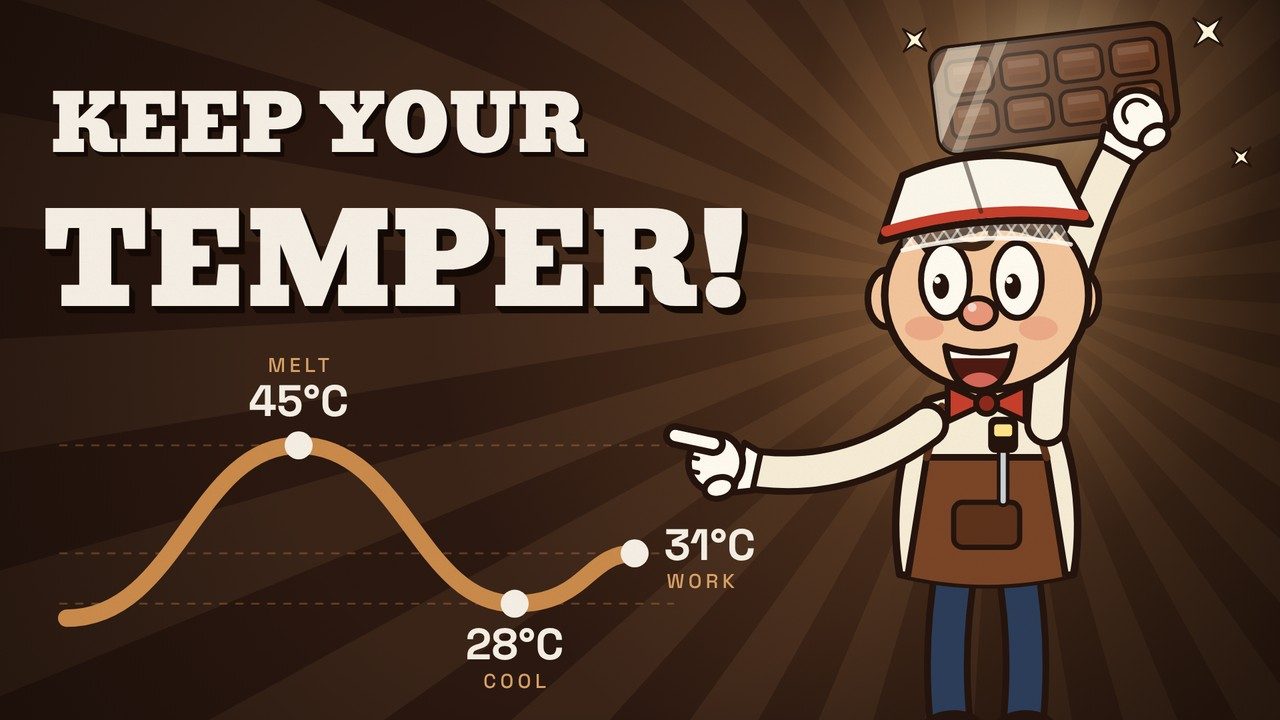
- The tempering curve: melt, cool, rewarm, hold
- Fat bloom and sugar bloom, and what causes them
- Tempering on a production line
- Two ways to check your temper: the paper test and a temper meter
- Setting, gloss and snap
The tempering curve
- Melt to about 45°C, so no crystals are left.
- Cool to about 28°C. The first Beta crystals form, and unstable Beta Prime crystals form too.
- Rewarm to about 31°C. The Beta Prime crystals melt out and the Beta seeds survive.
- Hold it there and keep it moving. Stirring keeps the crystals small and evenly spread.
These are typical dark chocolate figures. Milk chocolate runs a degree or two lower and white chocolate lower still, so always follow your chocolate supplier’s specification. Then cool it gently, and store the finished chocolate cool, dry and steady.
Did it temper?
The quickest check is the paper test: spread a little on baking paper. Well-tempered chocolate sets glossy and shrinks as it sets, so the edges curl. That shrinkage is also why tempered chocolate pops cleanly from the mould.
On a production line, a temper meter chills a sample and plots its temperature. As crystals form they give off heat, so the curve tells you the result: a flat plateau is just right, a bump means under-tempered, and a curve that keeps falling means over-tempered.